Museum Exhibit Blog Post: The Legacy of Ancient Greece
Ancient Greece is often considered one of the most influential civilizations that ever existed. Its achievements in architecture, science, and art have shaped societies for thousands of years and continue to influence the modern world today.¹ The ideas and innovations developed by the Greeks spread throughout Europe, the Middle East, and beyond, leaving a lasting impact on future civilizations.² Many of the values and concepts that are important today, such as scientific inquiry, artistic excellence, and architectural design, can be traced back to Ancient Greece.³
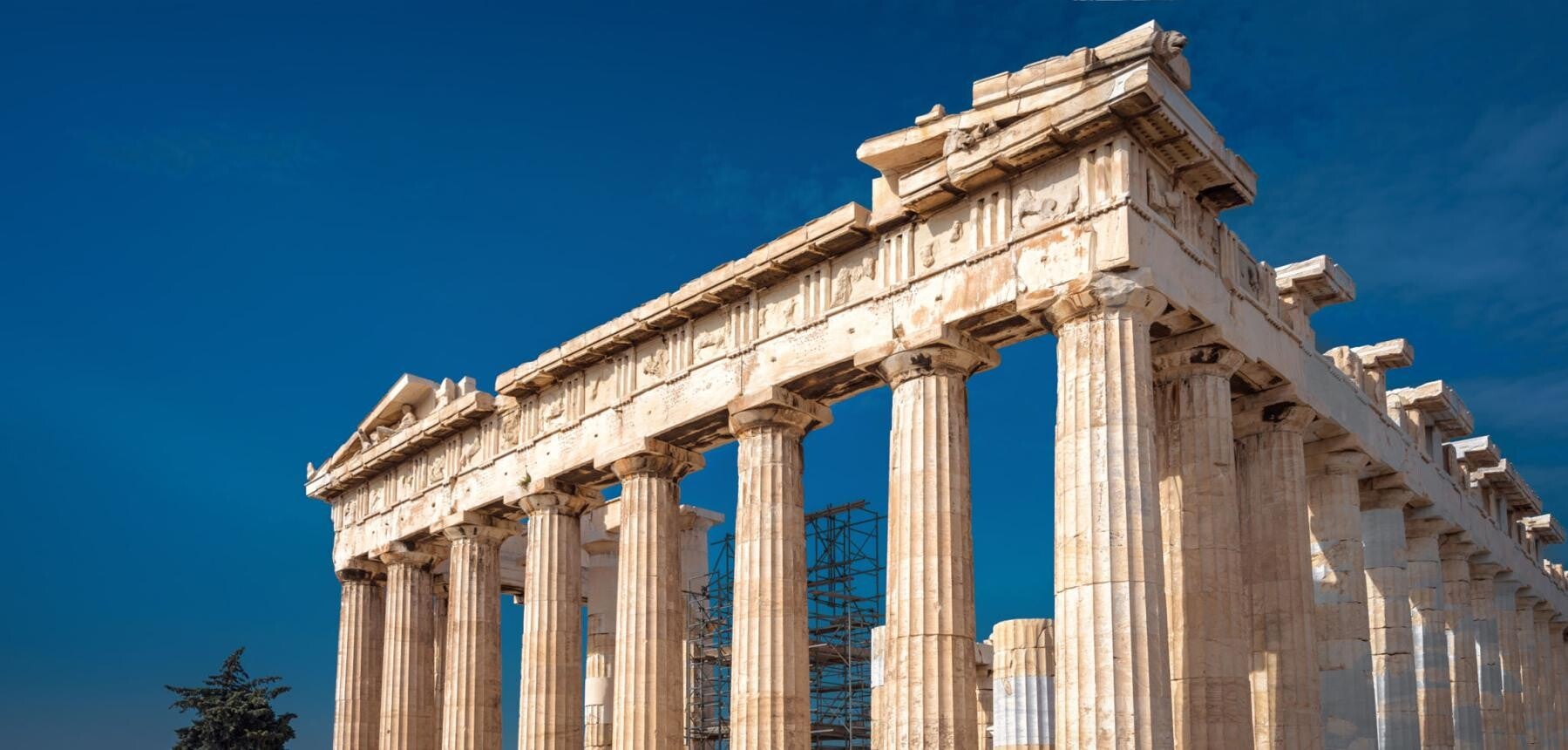
Artifact 1: The Parthenon
The Parthenon is a temple located on the Acropolis in Athens. It was constructed between 447 BCE and 432 BCE, it was dedicated to Athena, the patron goddess of Athens.⁴ The Parthenon is built from marble and decorated with detailed sculptures, the Parthenon is considered one of the greatest achievements of Greek architecture. Historically, the Parthenon was significant because it symbolized the power, wealth, and cultural achievements of Athens during its Golden Age.⁶ At the time of its construction, Athens had become a leading political and cultural center. The Parthenon demonstrated the city's strength and is commitment to honouring he gods.⁷ It also represents the political achievements of Athens during the 15th century BCE at the time as Athens was developing democratic institutions that allowed many citizens to participate in government decisions. The construction of the Parthenon was funded in part by Delian league, an alliance of Greek cities led by Athens; as a result the building became a symbol not only of religion but also of political power and identity. Citizens of Athens viewed the Parthenon as evidence of their success and leadership within the Greek world. The Parthenon influence extended far beyond ancient Greece. Its architecture style inspired buildings throughout the Roman Empire and later throughout Europe and North America.⁸ Despite centuries of war, natural disasters, and human damage efforts continue today to restore and protect the structure as historians and architects study the Parthenon to learn more about ancient construction techniques and Greek society. This ongoing preservation demonstrates how modern societies continue to value and learn from the accomplishments of ancient Greece. Many government buildings, museums, and monuments today use Greek columns and design elements that originated with structures such as the Parthenon.⁹
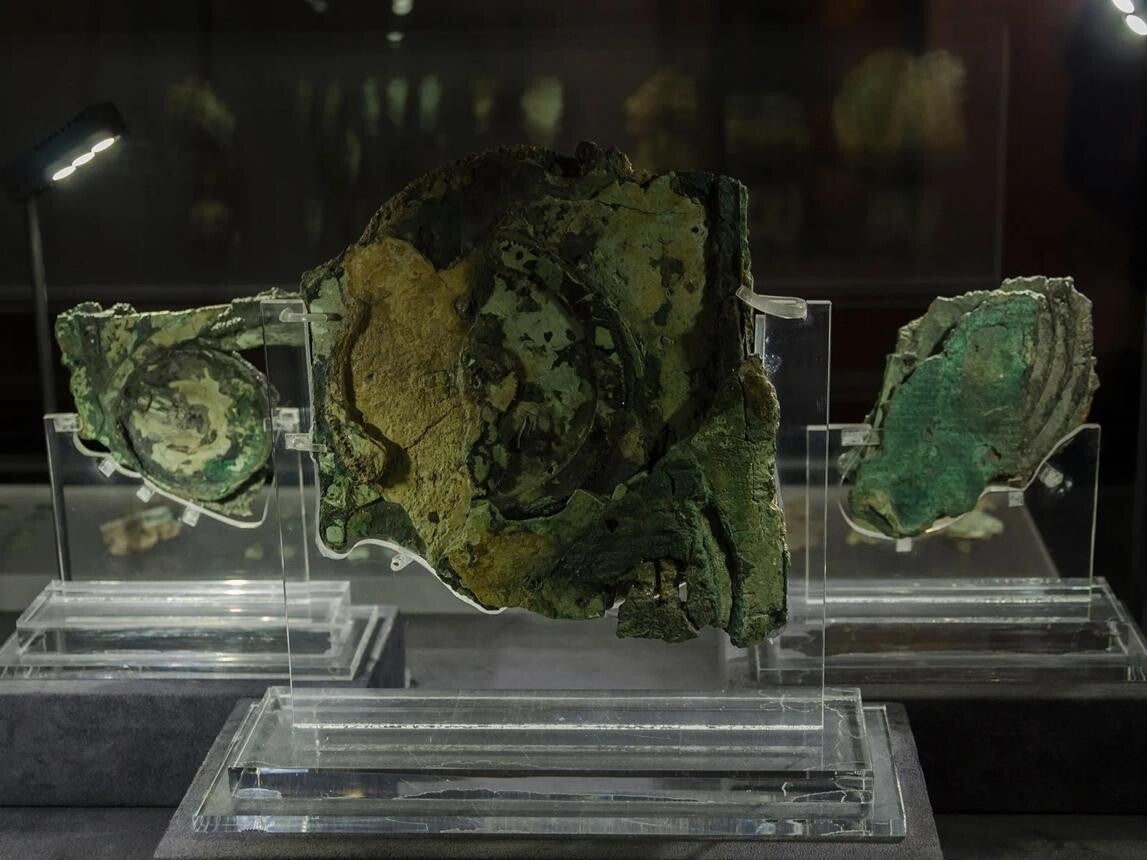
Artifact 2: The Antikythera Mechanism
The Antikythera mechanism is one of the most remarkable artefacts from ancient Greece. Discovered in a shipwreck near the Greek island of Antequera in 1901. The device dates to approximately 100 BCE.¹⁰ It consists of a very complex system of bronze gears and is widely regarded as the world's first known analogical computer.¹¹ The historical significance of this device lies in what it reveals about Greek scientific knowledge. For many years, historians believe that such advanced technology did not exist until a much later time.¹² Detailed examinations of the mechanism revealed dozens of interconnected gear cables capable of performing complex calculations. This discovery forced historians to reconsider the level of scientific knowledge possessed by ancient Greek engineers, and astronomers. The discovery of the mechanism showed that Greek scientists and engineers had a far greater understanding of mathematics, astronomy, and mechanics than previously believed.¹³ The mechanism’s legacy can also be seen in modern scientific thinking, today scientists use sophisticated instruments and computers to study space and predict astronomical events, although the technology has advanced dramatically the basic goal remains the same: understanding and explaining the universe through observation and calculation. This mechanism serves as an early example of humanity's desire to use technology to understand the natural world, making it an important milestone in science. Greek philosophers and scientists sought logical explanations for astronomical phenomena, leading to innovations such as the Antikythera Mechanism.¹⁴
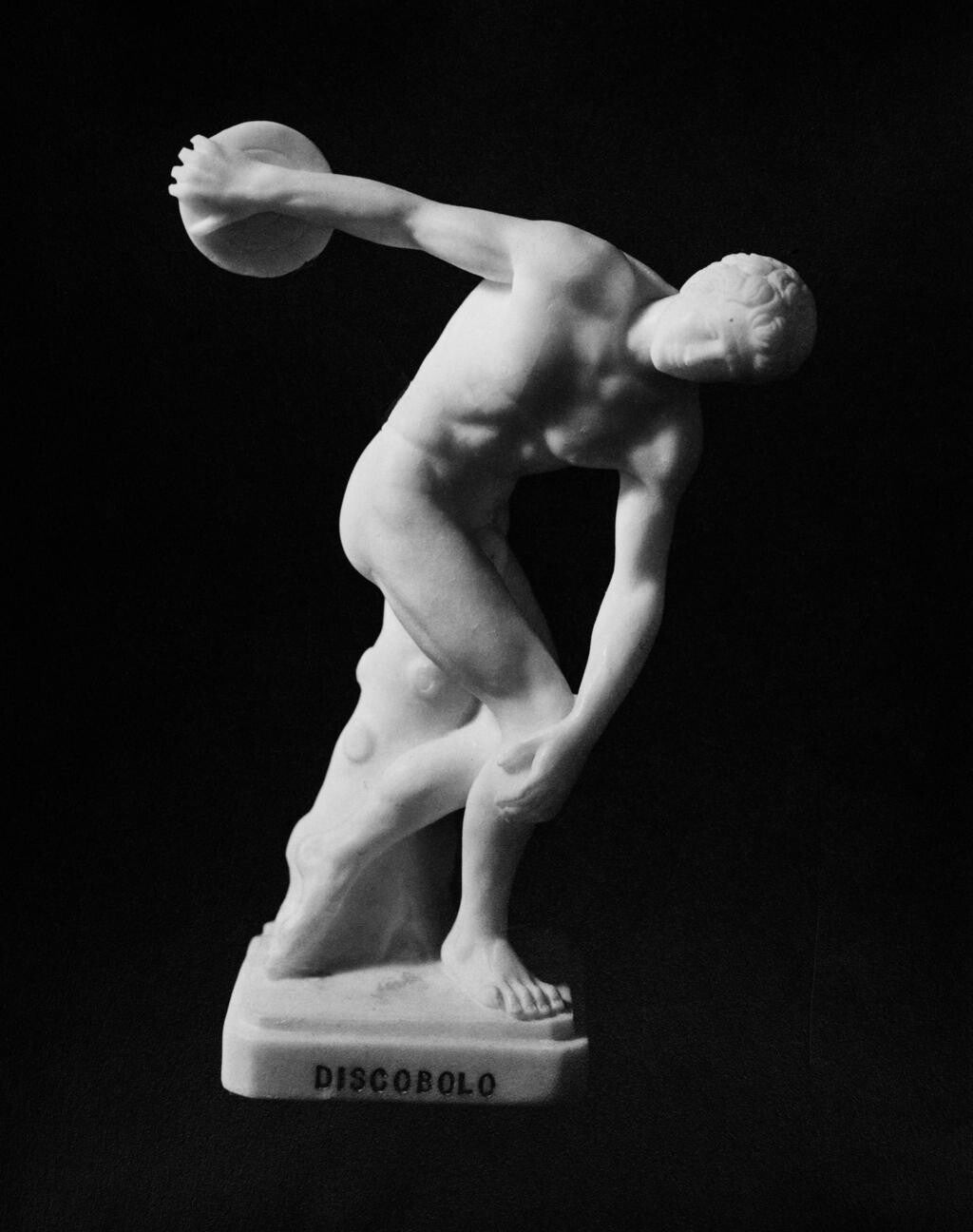
Artifact 3: The Discobolus
The Discobolus, also known as the Discus Thrower, is a very famous Greek sculpture created by the sculptor Myron around 460 to 450 BCE.¹⁵ The statue depicts an athlete in the moment before throwing a discus. Although the original bronze sculpture has been lost, several marble copies survived.¹⁶ The Discobolus is historically important because it reflects important Greek values. Athletics played a central role in Greek society, particularly through competitions, such as the Olympic Games.¹⁷ The Discobolus also reflects the Greek belief in the balance between physical and intellectual development. Greek education encouraged individuals to develop both the body and the mind. Athletic competitions were reviewed as opportunities to demonstrate discipline, determination, and personal excellence. This sculpture captures these values by showing an athlete at the moment of intense concentration and control. As a result, the Discobolus represents more than a sporting event; It symbolizes the ideals that ancient Greeks believed every citizen should strive to achieve. Physical fitness, discipline, and excellence were highly respected. The influence of the Discobolus extends far beyond Ancient Greece as Greek artistic techniques inspired Roman influenced renaissance sculptures, such as Michelangelo.¹⁹

Footnotes
- Encyclopaedia Britannica, “Ancient Greece,” accessed June 4, 2026.
- Mark Cartwright, “Ancient Greece,” World History Encyclopedia, accessed June 4, 2026.
- Encyclopaedia Britannica, “Greek Civilization,” accessed June 4, 2026.
- Encyclopaedia Britannica, “Parthenon,” accessed June 4, 2026.
- World History Encyclopedia, “Parthenon,” accessed June 4, 2026.
- Encyclopaedia Britannica, “Parthenon.”
- World History Encyclopedia, “Parthenon.”
- Encyclopaedia Britannica, “Parthenon.”
- World History Encyclopedia, “Parthenon.”
- Encyclopaedia Britannica, “Antikythera Mechanism,” accessed June 4, 2026.
- The British Museum, “The Antikythera Mechanism,” accessed June 4, 2026.
- Encyclopaedia Britannica, “Antikythera Mechanism.”
- The British Museum, “The Antikythera Mechanism.”
- Encyclopaedia Britannica, “Antikythera Mechanism.”
- Encyclopaedia Britannica, “Discobolus,” accessed June 4, 2026.
- World History Encyclopedia, “Discobolus,” accessed June 4, 2026.
- Encyclopaedia Britannica, “Olympic Games,” accessed June 4, 2026.
- Encyclopaedia Britannica, “Discobolus.”
- World History Encyclopedia, “Discobolus.”
Bibliography
Cartwright, Mark. “Ancient Greece.” World History Encyclopedia. Accessed June 4, 2026.
Encyclopaedia Britannica. “Ancient Greece.” Accessed June 4, 2026.
Encyclopaedia Britannica. “Antikythera Mechanism.” Accessed June 4, 2026.
Encyclopaedia Britannica. “Discobolus.” Accessed June 4, 2026.
Encyclopaedia Britannica. “Greek Civilization.” Accessed June 4, 2026.
Encyclopaedia Britannica. “Olympic Games.” Accessed June 4, 2026.
Encyclopaedia Britannica. “Parthenon.” Accessed June 4, 2026.
The British Museum. “The Antikythera Mechanism.” Accessed June 4, 2026.
World History Encyclopedia. “Discobolus.” Accessed June 4, 2026.
World History Encyclopedia. “Parthenon.” Accessed June 4, 2026.
Create Your Own Website With Webador